Dreaming About Water:
What It Might Be Reaching For
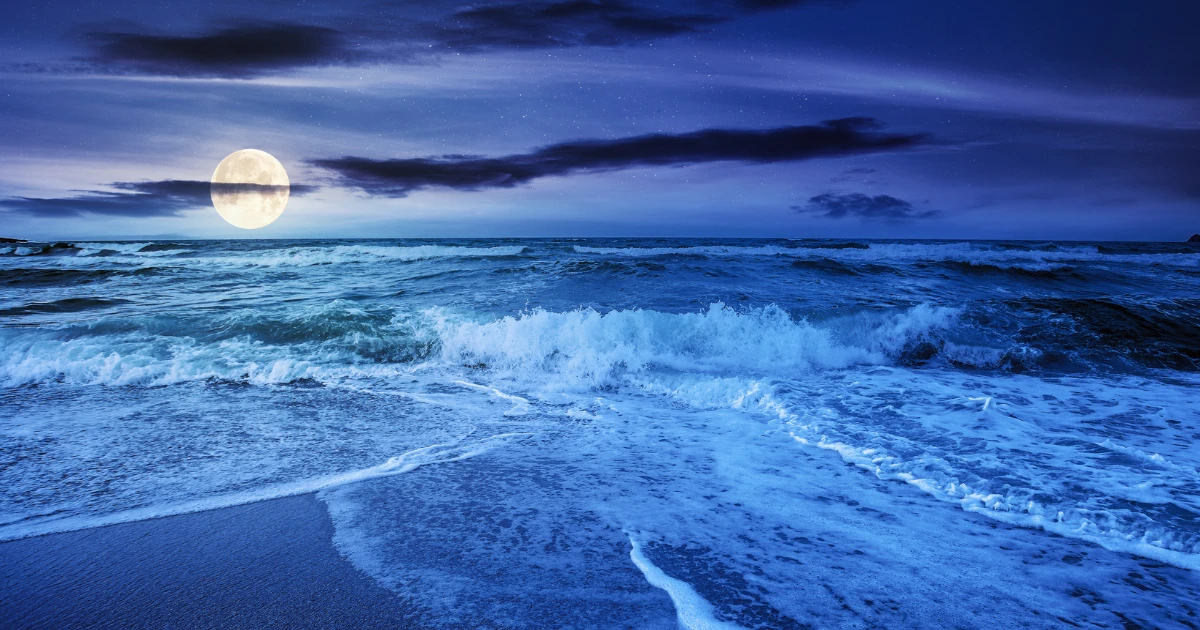
A still lake in the morning light. A wave growing taller. Rain, a flooded room, the sea stretching to the horizon. Water is one of the most common images in our dreams – and hardly any other element appears in so many forms. Maybe you've just woken from a dream like this and wonder what it was trying to tell you.
Many sites give you a quick, fixed answer – "dirty water means this, a flood means that." Somnova takes a different path. Water can't be locked into a table. But there's a common thread that helps you understand your own water dream.
Why water often has to do with feelings
Across many cultures and eras, water in dreams has been connected with our emotional life. That isn't a fixed rule, but it's an understandable image: just as water flows, rises, settles or churns, so do our feelings.
That's why, with a water dream, it's worth asking less "What does water mean?" and more: "What state was the water in – and how did I feel about it?" That's where the key lies, not in the element itself.
What stays important: this is an invitation to sense into things, not a diagnosis. A water dream says nothing fixed about your psyche, and certainly nothing about your future.
Why water appears so often in dreams
Water is among the most common motifs there is – and that's no accident. We're familiar with it from birth: it surrounds us, we're largely made of it, and it accompanies us through daily life in countless forms. Hardly any other element is so deeply anchored in our experience.
Add to that its changeability. Water can be still or roaring, clear or murky, carrying or threatening – it's exactly this range that makes it such a versatile dream image. It can take on almost any feeling that's currently seeking room in you. Perhaps that's precisely why it visits our nights so often.
The state of the water makes the difference
Whether a water dream feels light or heavy often depends on how the water was. A few common states – as starting points, not formulas:
-
Calm, still water. A smooth lake, gentle waves. Many experience this as peaceful – it tends to appear in phases when something has cleared up or come to rest.
-
Churning, stormy water. Waves, current, turbulence. This can echo when a lot is in motion in waking life, or when strong feelings are near the surface.
-
Clear water. You can see all the way to the bottom. Often connected with a sense of clarity or openness.
-
Murky water. You can't see what lies beneath. This invites the question of what's currently unclear or still hidden – without that having to mean anything bad.
-
Deep water. The depth can fascinate and, at the same time, stir a little awe – an image for what lies beneath the surface.
None of these states has a fixed meaning. They're an offer to sense more precisely which version you dreamed.
The most common water dreams
Alongside the state, the situation matters too. These variations come up especially often:
-
The sea or ocean. Vastness and depth at once – often an image for something big that you can't fully take in. How it feels depends a lot on whether the sea was calm or wild.
-
A flood. Water that rises, a room filling up. Many connect this with the feeling that a lot is pouring in on them at once. That's a feeling to look at, not an alarm signal.
-
Being in the water or swimming. Does the water carry you, or are you struggling? How you move in it often mirrors how you feel about your emotions right now – carried or challenged.
-
Drowning or going under. This image can feel oppressive, but it's very human. It gently invites the question of where something seems to be growing over your head right now – without the dream being a prediction.
Here too: what matters isn't the category, but how it felt to you.
How to interpret your water dream
Instead of looking it up in a dictionary, you come closest to your own dream by calmly asking it a few questions:
1. What state was the water in? Calm or churning, clear or murky, shallow or deep? The state is often the most important clue.
2. How did you feel about it? Safe, overwhelmed, curious, afraid? The feeling leads you to the core faster than any general interpretation.
3. What was your role? Did you only watch the water, were you right in it, were you carried or swept along? Your position in the dream often says more than the water itself.
4. Is there a feeling taking up a lot of space right now? Because water is so closely tied to the emotional, it's worth looking at what's moving you inwardly – entirely without judgment.
None of these answers gives a fixed solution, but often a sense that feels right. And if you'd like to understand more about how dream images can be read in the context of your life, you'll find it in the broad overview of dream interpretation.
Frequently asked questions
What does it mean to dream about water?
There's no fixed meaning. Water is often linked with our emotional life – what matters is the state the water was in and how you felt about it. The dream is an invitation to self-reflection, not a diagnosis and not a prediction.
What do calm or churning water mean in a dream?
Calm water is experienced by many as peaceful, churning water more so when a lot is in motion while awake. These are starting points, not fixed rules – how you felt matters more than the category.
What does it mean to drown in a dream?
This image can feel oppressive, but it's very human and common. Instead of reading it as a warning, it helps to ask: where does something seem to be growing over my head right now? It isn't a prediction.
Does dirty water mean something bad?
No, not necessarily. Murky water invites the question of what's currently unclear or still hidden. That needn't mean anything negative and says nothing about your mental health.
Explore your dream
Tell Somnova your next dream. It listens calmly, gently makes sense of it and asks you the question that moves you forward – free and entirely yours.
Interpret a dream